By Harry Sanders
INTRODUCTION
By Harry Sanders
INTRODUCTION
|
1. It was the largest P.O.W. camp in Germany. 2. It had a notorious reputation among prisoners. 3. The camp was situated in an area that made escape difficult. Although this did not stop the P.O.Ws from trying. However, many of these men in their attempts to reach England failed, and were shot on sight. |
 |
|
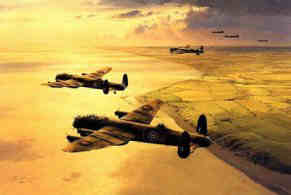
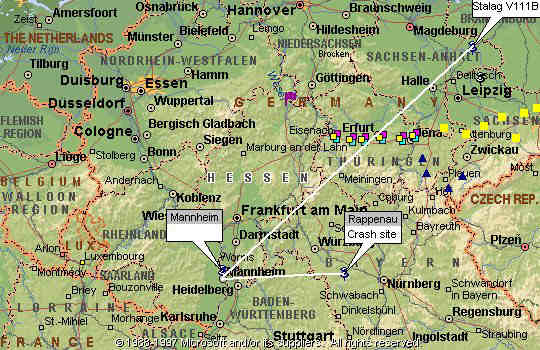
On the above date, we, the crew of..( Deleted ) took off from an aerodrome in East Anglia to bomb the Nazi headquarters at Munich, Bavaria. The trip to Germany was uneventful. On our first run-up over the target we were hit by flak and our starboard engine caught fire, but was extinguished by the crew. We dropped our bombs and began the dangerous return trip to England on three engines. Shortly there-after we were attacked by an ME.110. After a battle with the attacking fighter, we eventually caught fire and the whole starboard wing was ablaze. The order to "bale out" was given. The bombardier left the Aircraft first, followed by the engineer and then myself at approximately 700 ft. Fortunately I landed in a tree thus breaking my fall. After considerable difficulty I managed to free myself and reached the ground minus parachute. I set off for the Bavarian Alps, which were visible from where I was. However I was captured by a civilian policeman after fifteen minutes of freedom. |
The following is Sgt. Goulette's account of the raid
told to a third party after the war.
| They, referring to the crew of the Lancaster, 44th Squadron,
were half an hour late in starting owing to their having to go in a different
plane at the last minute and so when they reached Munich they were the
last to go in and every available searchlight and gun was concentrated
on them. They were hit over the target and one engine set on fire but they
managed to put the fire out but had to come home on three engines which
of course meant that the plane was much less maneuverable and was an easy
target for fighters. As they neared Heidelburg they were attacked by an
M.E. 110 and there was a running fight for 3/4 of an hour Then it broke
off but unfortunately it came in again from underneath their blind spot
and raked them with its guns from end to end setting the starboard wing
on fire. Then the pilot gave the order to abandon aircraft. They were by
then down to 1000 ft. Sgt. Goulette went first, then Sgt. Imrie (but unfortunately
his parachute did not open) and he was killed, and then Sgt. Sanders. So
they were the only three who managed to get out. Sgt. Goulette landed in
a field an saw the plane go down. Just above the tree tops it flattened
out as though the pilot was going to make a crash landing but on hitting
the ground it blew up. He and Sgt. Sanders, who had landed near a different
village, met the German pilot who had shot them down, in the Burgomaster's
office, and he congratulated them on the splendid fight they had put up.
When they told him they had been flying on three engines he could hardly
believe it and said they ought to be flying for the Luftwaffe instead of
the RAF.
A special thanks to C.B. for this information. |
Information received from B. Kettle (Volunteer - Ministry of defense)
|
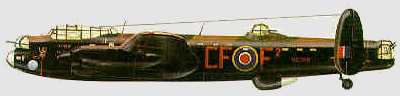
Your dads plane..... 44Sqn Lancaster I W4125 KM-Q T/o 1802 Waddington. Crashed 2 km N of Bad Rappeneau, 15 km NNW of Heilbronn, Germany. Those who died are buried in Durnbach War Cemetery. Operation: Munich
Details of your father receiving his DFC appears in the London Gazette
on 17
|


 |
The fate of the crew
|
It is here where the first pangs of hunger and craving for a smoke are brought home to the usually well fed men of the R.A.F. The cooler however has proved to be an ingenious device to the German Authorities to make men "Talk". The idea is very simple, a man put in solitary for a few days is apt to talk incessantly to anyone who will listen to him and the Germans were always eager to "Listen". Once out of the cooler we were taken to the main camp, where we met numerous chaps, some who had been captured in the Middle East and others like myself shot down over Germany itself. |

New years eve 1942
|
|
Copyright© 1999-2001/Pam Anderson
All Rights Reserved